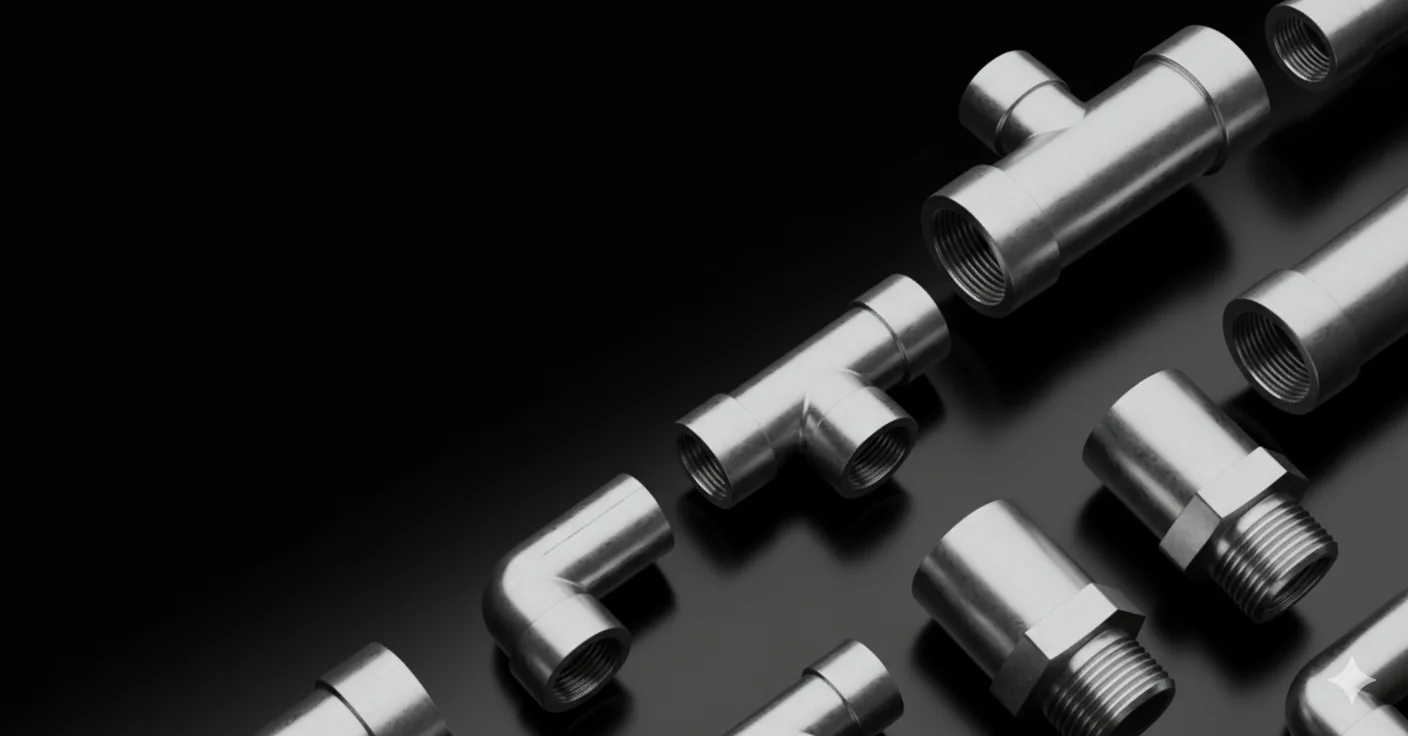
ASTM A234 WPB fittings are carbon steel buttweld fittings widely used in industrial piping systems due to their high strength, durability, cost-effectiveness, and ability to withstand moderate to high pressure and temperature conditions. Governed by the specification ASTM A234, these fittings ensure consistent quality, making them a preferred choice in industries such as oil & gas, power generation, petrochemicals, and water treatment.
What Are ASTM A234 WPB Fittings?
ASTM A234 steel pipe fittings are wrought carbon steel fittings designed for use in pressure piping and vessel fabrication. The WPB grade is the most commonly used type, known for its excellent mechanical properties and weldability.
Key Functions
- Connect pipes
- Change flow direction
- Reduce pipe diameter
- Terminate piping systems
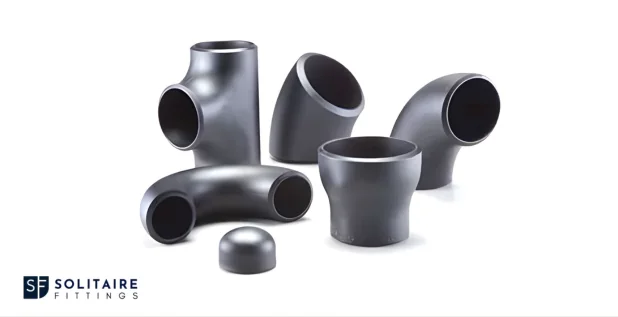
Common Types
- Elbows (45°, 90°, 180°)
- Tees (Equal & Reducing)
- Reducers (Concentric & Eccentric)
- Caps
- Stub Ends
Overview of Specification ASTM A234
The specification ASTM A234 defines the standard requirements for carbon and alloy steel pipe fittings intended for moderate and high-temperature service.
It Covers
- Chemical composition
- Mechanical properties
- Manufacturing process
- Heat treatment
- Testing and inspection
Key Highlights
- Applicable to buttweld fittings
- Suitable for seamless and welded pipes
- Ensures uniform quality and performance
- Widely accepted in global industries
Why ASTM A234 WPB Fittings Are Widely Used
- High Mechanical Strength: ASTM A234 WPB fittings provide excellent tensile and yield strength, making them suitable for high-pressure industrial systems.
- Cost-Effective Material: Compared to stainless steel and alloy steel, ASTM A234 steel pipe fittings offer a more economical solution for standard applications.
- Excellent Weldability: These fittings are easy to weld using conventional techniques, reducing fabrication time and installation costs.
- Suitable for High Temperature & Pressure: WPB fittings can withstand Moderate to high temperatures and High-pressure conditions. This makes them ideal for demanding environments.
- Wide Range of Sizes & Configurations: Available in multiple sizes, thicknesses, shapes. This versatility supports complex piping system designs.
- Compliance with International Standards: Manufactured as per the specification ASTM A234, these fittings ensure safety, reliability, and consistent quality.
- Long Service Life: With proper surface treatment (painting, galvanizing, coating), these fittings offer extended durability even in challenging environments.
Chemical Composition of ASTM A234 WPB
| Element | Composition (%) |
|---|---|
| Carbon (C) | ≤ 0.30 |
| Manganese (Mn) | 0.29 – 1.06 |
| Phosphorus (P) | ≤ 0.050 |
| Sulfur (S) | ≤ 0.058 |
| Silicon (Si) | ≥ 0.10 |
Mechanical Properties of ASTM A234 WPB Fittings
| Property | Value |
|---|---|
| Tensile Strength | ≥ 415 MPa |
| Yield Strength | ≥ 240 MPa |
| Elongation | ≥ 22% |
Applications of ASTM A234 WPB Fittings
- Oil & Gas Industry:Used in pipelines for transporting oil, gas, and petroleum products.
- Power Plants:Applied in steam, water, and high-temperature piping systems.
- Petrochemical Industry:Suitable for handling chemicals and hydrocarbons.
- Water Treatment Plants:Used in water distribution and processing pipelines.
- Construction & Infrastructure:Used in structural and utility piping systems.
Advantages Over Other Materials
| Feature | ASTM A234 WPB | Stainless Steel | Alloy Steel |
|---|---|---|---|
| Cost | Low | High | Medium-High |
| Strength | High | Medium | Very High |
| Corrosion Resistance | Moderate | Excellent | Good |
| Weldability | Excellent | Good | Moderate |
ASTM A234 WPB vs WPC vs WPL6
WPB is not the only carbon steel fitting grade. Knowing how it compares with its closest alternatives helps explain why ASTM A234 WPB fittings are the default choice for most plants.
ASTM A234 WPB
Minimum tensile strength of 415 MPa (60 ksi) and minimum yield strength of 240 MPa (35 ksi). It matches the most common carbon steel pipes, ASTM A106 Grade B and API 5L Grade B, which is why it is stocked in the widest range of sizes. See our ASTM A234 WPB carbon steel buttweld fittings for full dimensions.
ASTM A234 WPC
A higher-strength grade with a minimum tensile strength of 485 MPa (70 ksi) and yield strength of 275 MPa (40 ksi). It is used with A106 Grade C pipe where higher design pressure is needed, but it is less widely stocked than WPB.
ASTM A420 WPL6
WPL6 is covered by a different specification, ASTM A420, and is Charpy impact tested at -46°C. Choose ASTM A420 WPL6 fittings instead of WPB when the design temperature falls below about -29°C.
How ASTM A234 WPB Fittings Are Made
Seamless Fittings
Seamless WPB elbows, tees and reducers are hot-formed from seamless pipe using mandrel, extrusion or die-forming processes. They have no weld seam, so they are preferred for high-pressure lines in sizes up to about 24".
Welded Fittings (WPB-W)
Larger fittings are formed from plate and welded. ASTM A234 requires the weld seams of WPB-W fittings to be radiographed, so they are marked "WPB-W" to show welded construction.
Dimensions and Testing
Dimensions follow ASME B16.9 for standard fittings and ASME B16.28 for short-radius elbows. Every heat is checked for chemistry and tensile properties as required by ASTM A234, and the results are reported on an EN 10204 3.1 mill test certificate.
How to Choose the Right WPB Fitting
Match the Pipe Schedule
The fitting wall thickness must match the pipe schedule (SCH 40, SCH 80, XS and so on). A mismatch creates a step at the weld that weakens the joint and disturbs flow.
Check the Temperature Range
ASTM A234 WPB fittings suit most services from about -29°C up to around 425°C. For long-term service above that, carbon steel can suffer graphitization, so chrome-moly grades such as ASTM A234 WP91 or WP22 are used instead.
Plan for Corrosion
WPB has no built-in corrosion resistance. In wet or corrosive service, add a corrosion allowance, coating or lining, or consider stainless steel. Our guide to carbon steel vs stainless steel pipe fittings compares the two in detail, and butt weld vs socket weld vs threaded fittings explains which connection type to use.
Receiving Inspection Checklist for WPB Fittings
Before ASTM A234 WPB fittings go into stores or straight to site, a quick receiving inspection catches most supply problems early:
- Marking: each fitting should show the manufacturer's mark, "WPB" (or "WPB-W" if welded), size, schedule and heat number.
- Certificates: the heat number on the fitting must match the EN 10204 3.1 certificate, and the chemistry and tensile results must be within ASTM A234 limits.
- Dimensions: check centre-to-end, outside diameter at the bevel and wall thickness against ASME B16.9 tolerances.
- Bevel and surface: ends should have a clean 37.5° bevel with no laminations, cracks or heavy pitting, and the fitting should be free of deep scale and rust.
- Protection: bevel protectors or caps should be in place, especially for export shipments.
Common Mistakes When Using WPB Fittings
Most failures of carbon steel fittings come from how they are specified or installed rather than from the material itself. The most common mistakes are:
- Using a fitting with a thinner schedule than the pipe, which leaves the fitting as the weakest point of the line.
- Using WPB in low-temperature service where an impact-tested grade such as WPL6 is required.
- Ignoring corrosion allowance in wet, sour or seawater service, leading to early wall loss.
- Mixing WPB fittings with pipe of a different material grade without checking weld procedure qualification.
- Skipping post-weld heat treatment where the code requires it for thick walls.
Avoiding these points keeps an ASTM A234 WPB piping system safe and gives it a long, low-maintenance life.
Storage and Handling of WPB Fittings
Because carbon steel rusts when left exposed, fittings should be stored indoors or under cover on racks or pallets, away from direct contact with the ground and standing water. Keep the original bevel protectors in place until fit-up, and keep fittings separated by size, schedule and heat number so traceability is not lost. If fittings will be stored for a long period, ask for a rust-preventive oil or primer coat at the time of order. Simple handling discipline like this protects the weld bevels, avoids costly re-machining on site and keeps the material certificates matched to the right pieces.
Important Considerations
Before selecting ASTM A234 WPB fittings, consider:
- Corrosion resistance (may require coating or lining)
- Temperature limitations in extreme environments
- Proper welding procedures
- Project-specific standards and compliance
ASTM A234 WPB fittings are a cornerstone of industrial piping systems due to their strength, affordability, and versatility. Backed by the specification ASTM A234, these ASTM A234 steel pipe fittings deliver reliable performance across diverse industries. Their wide availability, ease of installation, and long service life make them the preferred choice for engineers, contractors, and project managers worldwide.
Frequently Asked Questions
Request Your ASTM A234 WPB Fittings Quote Today!